USDA cuts $1 billion for schools and food banks to buy fresh food from local farms

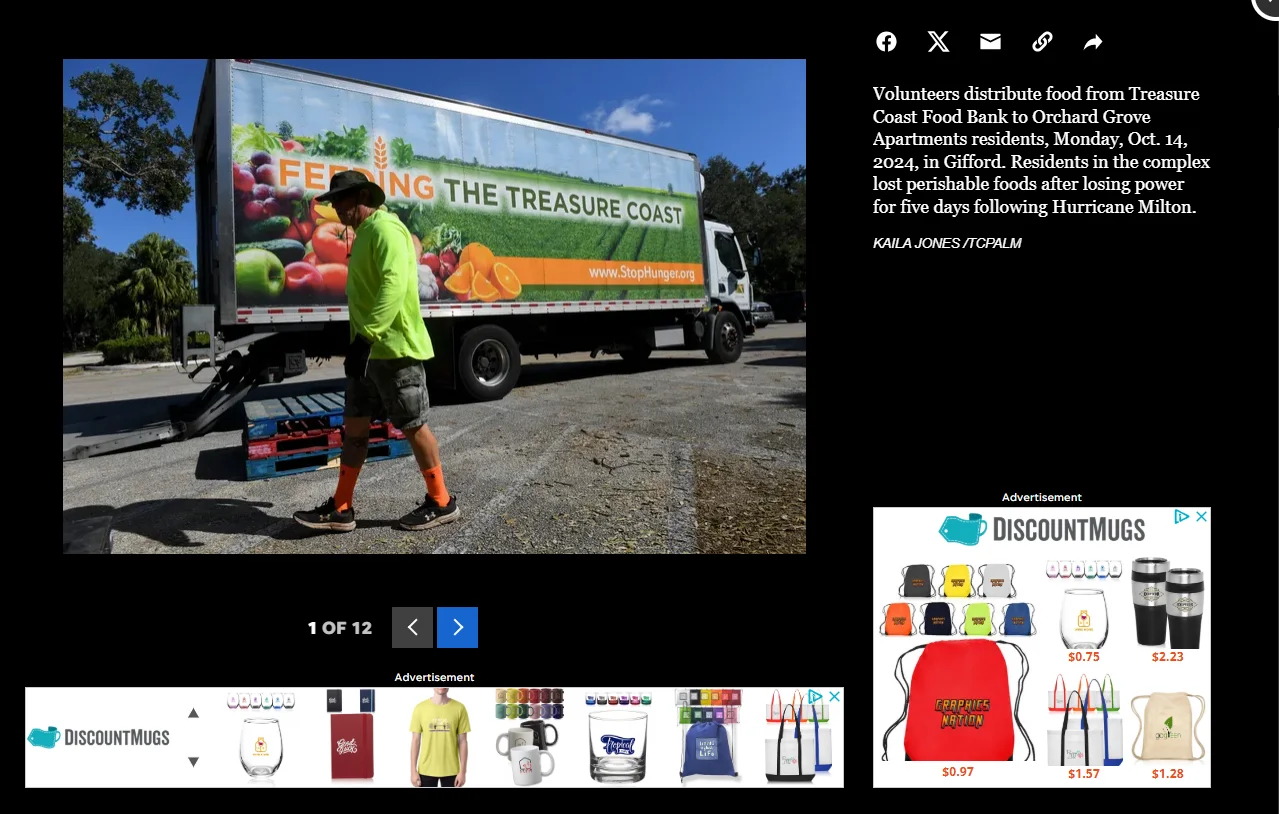
Treasure Coast Food Bank

Continue Reading

WFLX: Publix donates truck and food to TCFB for FANC program

WPTV: Publix donates truck and food to TCFB for FANC program

The Trump administration announced it will cut $1 billion in federal programs that allowed schools and food banks to buy fresh food from local farmers and ranchers — as part of his ongoing effort to reduce government spending.

The Department of Agriculture said the March 10 decision was to “return to long-term, fiscally responsible initiatives.”

But Treasure Coast schools and food banks worried cuts to the two programs would leave students, seniors and low-income families with less nutritious options amid rising costs of living.

Roughly $660 million was axed from the Local Food for Schools program, which helped schools buy healthier food for school lunches. Another $420 million was slashed for the Local Food Purchase Assistance Cooperative Agreement, which allowed food banks to buy locally sourced produce and dairy products.

More than 40 states participated in these programs — including Florida, which received $46 million for the food bank program last year, according to the state budget.

“Statewide, this will affect a million children,” said Judith Cruz, CEO of the Treasure Coast Food Bank. 

The Treasure Coast Food Bank used to receive $3.5 million that helped feed 250,000 people each week. Now, the food bank will have to rely on more processed foods to meet the community’s needs, Cruz said. Read More at TCPalm.com

This comes as the Trump administration, under Health Secretary Robert F. Kennedy Jr., wants to reduce the amount of “ultra-processed” foods in the American diet.

“We’ve worked so hard to educate people on the impacts of poor diet on chronic illness,” Cruz said. “Now I don’t know how we’re going to make that up.”

The Indian River County School District also said it will do everything it can to keep providing students with fresh food despite the funding cuts.

“At this point, it is not possible to completely understand the potential impact the cancellation of this program will have,” said spokesperson Cristen Maddux.

Emergency nutritional services grow in need as costs rise

The rising cost of living has left many Florida families food insecure, meaning they don’t have enough to eat and don’t know where their next meal will come from.

On the Treasure Coast, one in five children under 18 don’t have enough to eat, according to state health data.

That number has been on a steady climb since the coronavirus pandemic that started in March 2020.

Other factors have increased the area’s reliance on food banks, such as the back-to-back hurricanes in October and the recent layoffs by the Department of Government Efficiency, or DOGE, Cruz said.

“We’ve seen an increase in people who are new to seeking assistance,” Cruz said. “These are people who have never been on unemployment, who have worked all their lives.”

Cruz hopes the need for these programs will become more pronounced now that they’re gone and the Trump administration will reinstate them.

“It’s not like eliminating a handful of streaming services you don’t watch,” Cruz said. “These are essential services.”

TCPalm business reporter Jack Randall contributed to this report.

Jack Lemnus is a TCPalm enterprise reporter. Contact him at jack.lemnus@tcpalm.com, 772-409-1345, or follow him on X @JackLemnus.
 

Continue Reading

You’re Bolstering Seniors’ Health

You’re Lightening Families’ Loads

Can’t find what you’re looking for? Contact Us

Treasure Coast Food Bank is an equal opportunity provider.

In accordance with federal civil rights law and U.S. Department of Agriculture (USDA) civil rights regulations and policies, this institution is prohibited from discriminating on the basis of race, color, national origin, sex, disability, age, or reprisal or retaliation for prior civil rights activity.

Program information may be made available in languages other than English. Persons with disabilities who require alternative means of communication to obtain program information (e.g., Braille, large print, audiotape, American Sign Language), should contact the responsible state or local agency that administers the program or USDA’s TARGET Center at (202) 720-2600 (voice and TTY) or contact USDA through the Federal Relay Service at (800) 877-8339.

To file a program discrimination complaint, a Complainant should complete a Form AD-3027, USDA Program Discrimination Complaint Form which can be obtained online, at this link , from any USDA office, by calling (866) 632-9992, or by writing a letter addressed to USDA. The letter must contain the complainant’s name, address, telephone number, and a written description of the alleged discriminatory action in sufficient detail to inform the Assistant Secretary for Civil Rights (ASCR) about the nature and date of an alleged civil rights violation. The completed AD-3027 form or letter must be submitted to USDA by:

mail:
U.S. Department of Agriculture
Office of the Assistant Secretary for Civil Rights
1400 Independence Avenue, SW
Washington, D.C. 20250-9410;

fax:
(833) 256-1665 or (202) 690-7442;

email:
program.intake@usda.gov
This institution is an equal opportunity provider.


Para todos los demás programas de asistencia de nutrición del FNS, agencias estatales o locales y sus subreceptores, deben publicar la siguiente Declaración de No Discriminación:

De acuerdo con la ley federal de derechos civiles y las normas y políticas de derechos civiles del Departamento de Agricultura de los Estados Unidos (USDA), esta entidad está prohibida de discriminar por motivos de raza, color, origen nacional, sexo (incluyendo identidad de género y orientación sexual), discapacidad, edad, o represalia o retorsión por actividades previas de derechos civiles.

La información sobre el programa puede estar disponible en otros idiomas que no sean el inglés. Las personas con discapacidades que requieren medios alternos de comunicación para obtener la información del programa (por ejemplo, Braille, letra grande, cinta de audio, lenguaje de señas americano (ASL), etc.) deben comunicarse con la agencia local o estatal responsable de administrar el programa o con el Centro TARGET del USDA al (202) 720-2600 (voz y TTY) o comuníquese con el USDA a través del Servicio Federal de Retransmisión al (800) 877-8339.

Para presentar una queja por discriminación en el programa, el reclamante debe llenar un formulario AD-3027, formulario de queja por discriminación en el programa del USDA, el cual puede obtenerse en línea en: este enlace , de cualquier oficina de USDA, llamando al (866) 632-9992, o escribiendo una carta dirigida a USDA. La carta debe contener el nombre del demandante, la dirección, el número de teléfono y una descripción escrita de la acción discriminatoria alegada con suficiente detalle para informar al Subsecretario de Derechos Civiles (ASCR) sobre la naturaleza y fecha de una presunta violación de derechos civiles. El formulario AD-3027 completado o la carta debe presentarse a USDA por:

correo:
U.S. Department of Agriculture
Office of the Assistant Secretary for Civil Rights
1400 Independence Avenue, SW
Washington, D.C. 20250-9410;

fax:
(833) 256-1665 or (202) 690-7442;

correo electrónico:
program.intake@usda.gov
Esta entidad es un proveedor que brinda igualdad de oportunidades.