A Personal Commitment to Healthier Communities
By Judith Cruz, President and CEO, Treasure Coast Food Bank
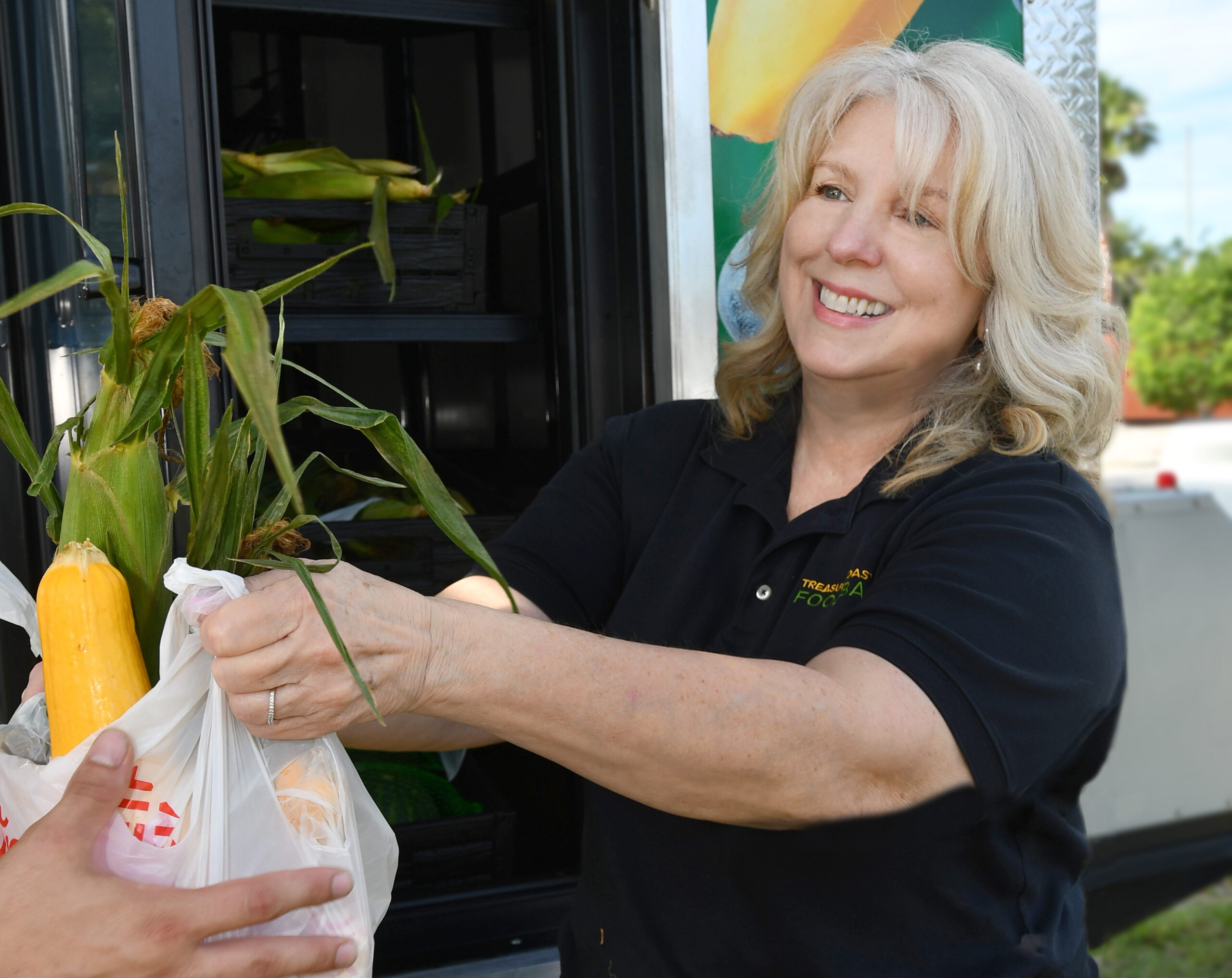
Judith Cruz at Whole Family Health Center Family Market Food Distribution
As CEO of the Treasure Coast Food Bank, I’ve seen firsthand the (critical relationship between nutrition and health in our community. Our society is grappling with a troubling rise in health conditions such as diabetes, heart disease, cancer, and obesity. Here on the Treasure Coast, these issues are even more severe, with rates surpassing both state and national averages. The most shocking statistic is that 25 percent of our neighbors— children and adults alike—don’t have access to the nutritious food they need to maintain their health and quality of life.
This issue is profoundly personal for me, extending beyond statistics. I have met with and listened to the concerns of my neighbors who face challenges related to hunger and health and their resilience has deeply impacted me.
When I began with the food bank in 2009, I recognized that addressing hunger required more than providing food; it needed to involve offering nourishing, health-promoting options. Driven by this vision, I initiated the planning and construction of our food production kitchen. This facility was designed to enhance our ability to deliver fresh, nutritious meals, reflecting my belief in food as medicine. Seeing the positive effects of these meals on my community’s health has only reinforced my commitment to this approach.
Treasure Coast Food Bank (TCFB) has been driven by a mission to do more than just meet immediate needs. We aim to foster self-sufficiency, long-term food security, and better health outcomes. I’ve seen the difference that consistent access to nutrient-dense food can make. That’s why I’m especially proud of our FRESHCareRx program, our latest initiative that delivers scratch-made, medically prepared meals, nutrition counseling, education, and referrals for additional services to those with chronic illnesses.
For the past 15 years, we’ve been pioneers in this field, collaborating with community partners in nutrition and healthcare to develop a holistic hunger-relief model. These collaborations have allowed us to enhance the nutritional quality of our food distributions and refine our methods for tracking health progress. We’ve integrated nutrition education into all our programs and supported our agency partners with capacity-building and SNAP outreach. These efforts have been crucial in stabilizing food security and improving health outcomes in our community.
The statistics about children’s nutrition are particularly alarming. One in three children don’t eat daily fruit, and nearly half don’t get their daily vegetables. These numbers are a stark call to action and drive our commitment to making a difference. This year, we took a significant step by joining the Food is Medicine Coalition Project, learning from experts like God’s Love We Deliver in New York City and Community Servings in Boston. Their insights have been
invaluable in helping us expand our medically tailored meal interventions throughout the Treasure Coast.
We’re also excited about our new 132,000 square-foot distribution center, which we broke ground on in February. This new facility will house a production kitchen, community engagement hub, and demonstration kitchen, allowing us to expand our culinary, nutrition, and wellness programs.
Here’s what’s next for us:
· Developing specialized programs for seniors, children, and people with chronic conditions.
· Offering a broader range of nutrition education and culturally sensitive resources.
· Continuously tracking outcomes and measuring impact to improve our efforts.
· Strengthening advocacy for food-as-medicine policies at local, state, and federal levels.
· Investing in equipment and facilities necessary to meet the growing demand for fresh produce and healthy meals.
· Enhancing collaborations with healthcare providers, nutritionists, and community organizations to broaden our program’s reach.
Our mission is to end hunger and improve health outcomes, but we can’t do it alone. I invite you to join us in this critical work. Whether through volunteering, donating, or simply spreading the word about the power of food as medicine, your involvement can make a real difference.
Together, we can transform the health and well-being of our Treasure Coast community, ensuring that everyone has not just enough food—but the right food—to live a healthy, vibrant life.